Asphalt work isn't cheap, and most homeowners only do it once or twice in the time they own a house. That makes it easy for a bad contractor to get it wrong and be three towns away before the cracks show up. Here's what actually separates a solid paving job from one that falls apart in two winters.
The Base Matters More Than the Asphalt
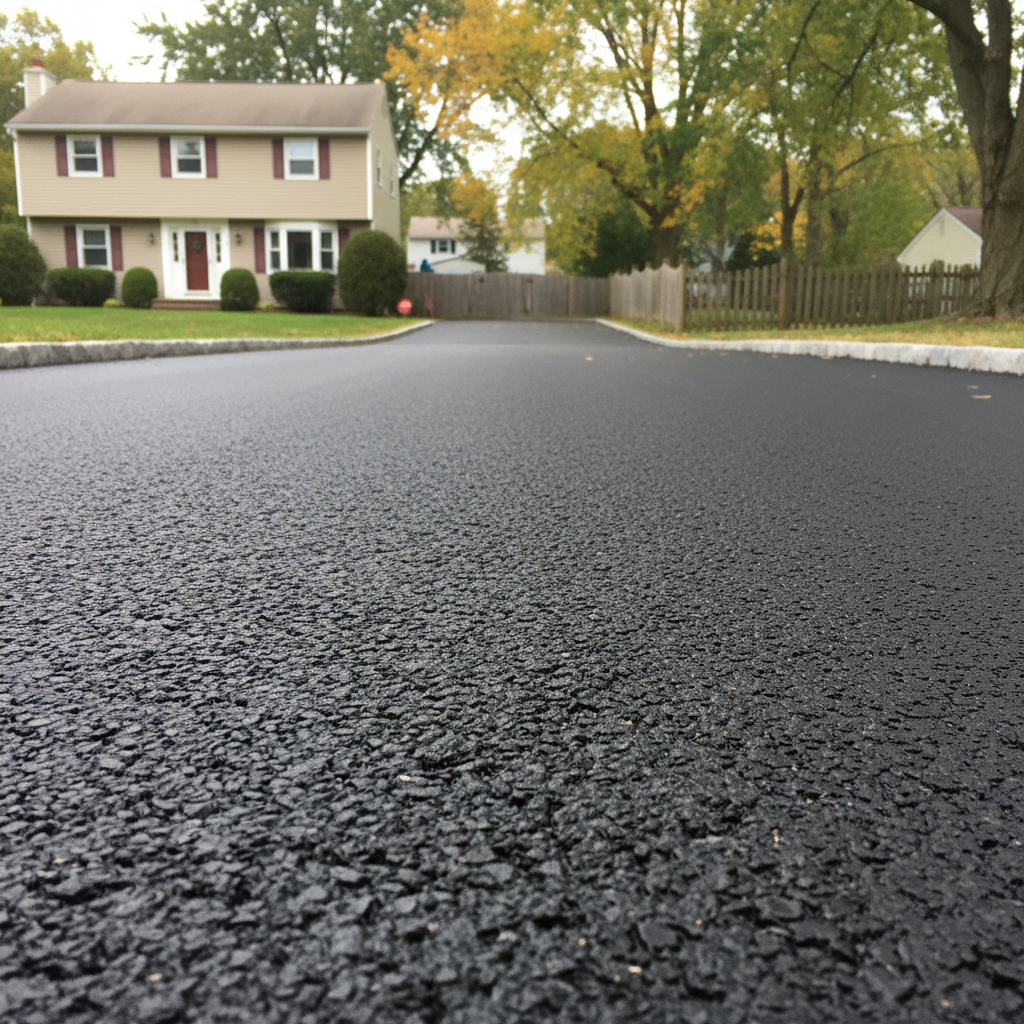
Almost every driveway failure on Long Island traces back to the same thing: not enough stone underneath. A driveway that's going to hold up needs 4 to 6 inches of compacted gravel base, run over with a vibratory plate or roller, before any asphalt goes down. Then you want two layers, not one: a binder course around 2 inches thick for strength, and a surface course of about 1.5 inches on top for the finish. A contractor who quotes you one thin layer poured straight onto the old subgrade is building you a driveway that looks fine in October and has alligator cracking by the second spring.
Ask for the base depth and the asphalt thickness in writing, in inches, not in general terms like "we'll do it right." If they can't give you a number, that's your answer.
What Freeport's Ground Does to a Driveway
Freeport sits low, close to the bay and the canals, and a lot of the older sections of town are built on filled marshland that was never great for drainage to begin with. The water table here is higher than it is a few miles inland, and sandy soil that drains fast in Merrick or Bellmore can still sit wet in parts of Freeport after a hard rain. That changes how a driveway or lot needs to be built. The base needs to compact properly even where the subgrade is soft, and the slope needs a real crown, usually around a quarter inch of fall per foot, so water moves off the asphalt and into the yard or the street instead of pooling against the garage door.
Winters here aren't brutal compared to upstate, but Nassau County still runs through a few dozen freeze-thaw cycles a season. Water gets into a hairline crack, freezes, expands, and that crack is twice as wide by March. On a house near the canals you've also got salt air working on top of that. None of this means asphalt won't hold up here. It means the base, the slope, and the crack sealing matter more than they would somewhere drier and flatter.
Questions Worth Asking Before You Sign Anything
- Are you licensed and insured, and can I see the certificate of insurance?
- Who's actually on the crew that day, your guys or a sub?
- What's the base depth and the asphalt thickness, in inches?
- Is the price per square foot, per ton, or a flat number, and what happens if you hit old concrete or buried debris under the driveway?
- How long before I can park on it, and how long before the edges can take a mower or a hand truck?
A contractor who's done real work in this area should be able to answer all five without hesitating, and should be the one bringing up drainage and base depth before you ask.
Red Flags That Should Send You Elsewhere
The classic one is the guy who knocks on your door saying he's got leftover asphalt from a job down the street and can do your driveway cheap, today, cash only. Walk away. Leftover asphalt cools fast and can't be properly compacted by the time it's spread, and there's no written contract to hold anyone to anything.
Other warning signs: a quote with no square footage, no thickness, and no base spec written down. A request for full payment up front before any work starts. No fixed business address. A truck with no company name on it. None of these by themselves is proof of a scam, but stack two or three together and you've got a real problem.
Permits, Inspections, and Timing
Most driveway resurfacing on an existing driveway in Freeport doesn't require a permit, but a new curb cut, an apron that touches the street, or any work that changes drainage toward a neighbor's lot usually does, and that goes through the Village of Freeport or the Town of Hempstead depending on where the property sits. A decent contractor will tell you up front whether your job needs a permit instead of leaving you to find out later. For larger jobs, like a parking lot or a full milling and repave, expect an inspection of the base compaction before the asphalt goes down, not just a drive-by after.
Paving season here really runs from April through November. Asphalt needs warm ground and warm air to compact and bond properly, and most crews won't lay it once daytime temperatures are consistently under 40 degrees. If someone offers to pave your driveway in January, ask what they're doing differently, because the honest answer is usually nothing.
On curing: new asphalt can take foot traffic in a day, but give it 2 to 3 days before you drive on it and a full week before anything heavy, like a moving truck, sits on it. The asphalt keeps curing and hardening for months after that, which is why sealcoating is normally held off for 60 to 90 days, sometimes a full season on a new driveway, so the oils in the fresh asphalt have time to settle before you seal over them.
We've covered driveways in this one mostly because that's the job most homeowners are picturing, but the same questions apply whether you're getting a cracked lot patched, a resurfacing job, or a full parking lot repaved. Base depth, drainage, and a contractor who'll put the specs in writing matter more than the brand of asphalt or how nice the truck looks. If you want someone local to walk your property and tell you straight what it needs, take a look at Rockwell Asphalt Solutions.